Why Stage Truss Matters
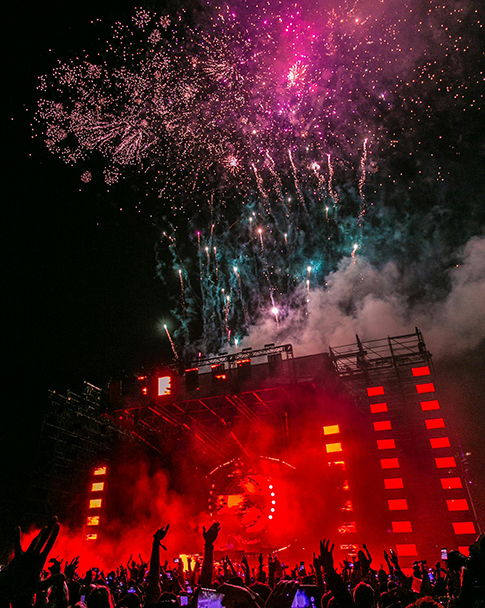
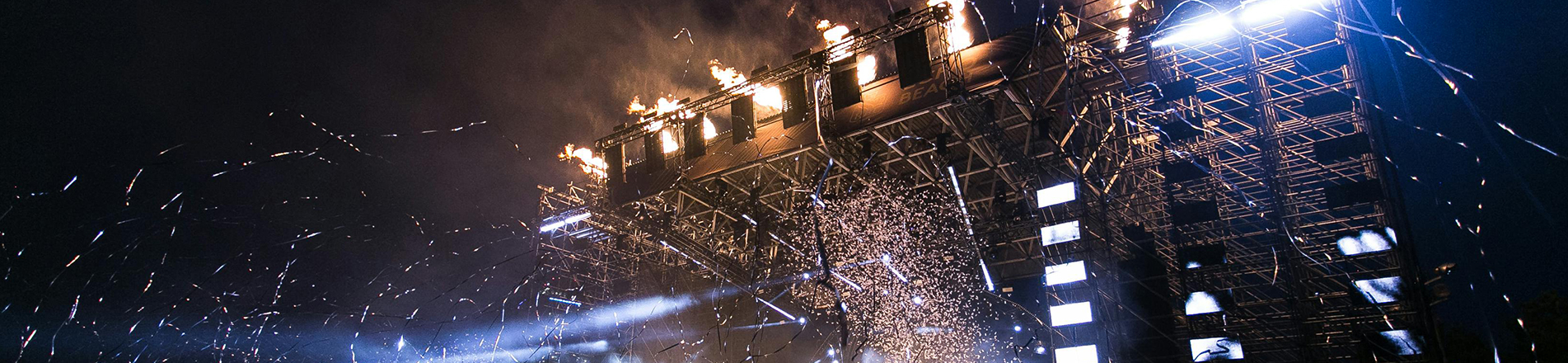
Stage truss is a light framework made of connected metal tubes that create stable triangular shapes. It’s used in concerts, exhibitions, and theaters to support lights, speakers, and decorations. Its importance comes from its quick setup and takedown. This gives designers more flexibility. It also reduces cost and weight.
Plus, it offers great wind resistance and durability. This lets event planners achieve large spans with fewer materials, enhancing both the visual appeal and safety of dynamic performances.
What is a Stage Truss System
Stage truss is like Lego for events: lightweight aluminum tubes that snap into bombproof shapes for hanging lights, speakers, and banners high up. It gives that pro "wow" without crashes.
Fresh angle others miss: Compared to clunky iron frames, aluminum stage truss boosts setup speed by multiples. From a 3m wedding backdrop to a 30m festival main stage or wild exhibit shapes overhead, it nails every job. Just pick sizes for your space, connect sections end-to-end with pins or screws, and a sturdy "sky castle" is ready.
Types of Stage Truss
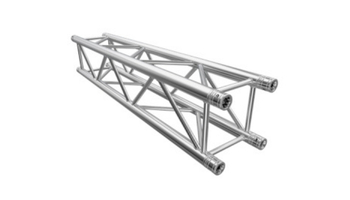
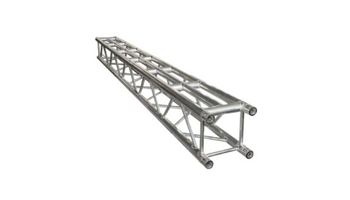
Box Truss (Square Truss)
This workhorse tops the popularity charts for a reason. Its four main chords create stability from any angle, so it manages heavier loads and intricate setups with ease. Event teams love it for big gatherings where every minute counts, like festivals or conferences needing fast assembly without compromising safety.
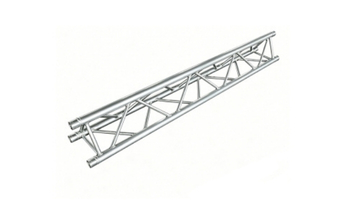
Triangle Truss
Built from three main chords in a triangular shape, this option feels lighter and easier to move. It is also a smart, cost-effective choice for moderate loads when you need a clear, visible structure. You can often see it in retail displays, lobbies, or decorative installations where appearance is just as important as function.
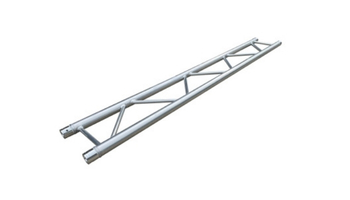
Ladder Truss
With just two parallel chords resembling ladder rungs, this design prioritizes portability and quick handling. It works best for lighter duties, such as supporting banners or roofs alongside other trusses. Rather than standing alone, it shines in temporary decor or signage setups that don't demand full structural power.
5-Chord Truss
Adding an extra chord boosts its twist resistance and rigidity under uneven loads. This makes it solid and reliable for heavy lighting or video walls, perfect for complex roofs and high-stakes stages where stability matters most.
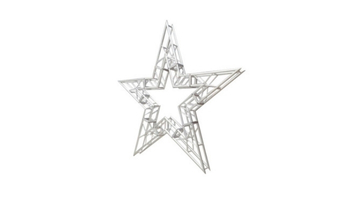
Specialty Truss (Heart-shaped, Circular, Star-shaped)
These stand out for their artistic flair, turning stages into eye-catching focal points without prioritizing brute strength. The unique forms draw attention and elevate the atmosphere. They present a certain challenge when aligning during installation, requiring extra care to get everything to line up perfectly.
Key Components of a Stage Truss System
Think of a stage truss like a human skeleton. Each part has a specific job to keep everything standing tall under pressure.
These connect square truss sections at precise angles. Box corners create 90-degree platforms for stable bases. Truss corners connect truss segments at various angles and directions, acting as crucial structural nodes. There are different way corners, such as 2-way corners (45°, 60° and 90°), 3-way corners, 4-way corners, and 5-way corners.
Top sections provides stable and secure mounting for hoisting and rigging. Sleeve blocks connect truss pillars to truss beams. They allow the truss beams to slide up and down for free height adjustment.
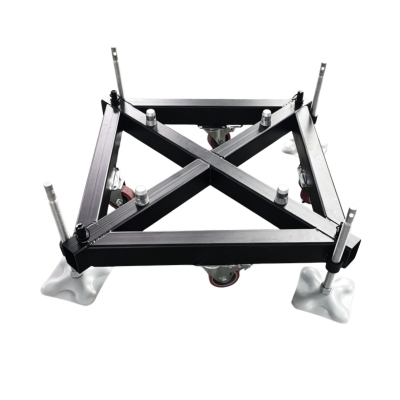
These heavy feet anchor everything to the ground. Their wide design prevents tipping on smooth floors or grass. Most include spots for sandbags to add extra stability fast. You can also add outriggers for even greater support on uneven terrain.
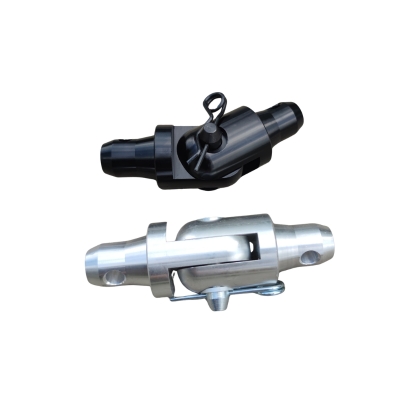
Hinges make it simple and quick to set up truss pillars vertically. They connect uprights efficiently so your structure rises smoothly without complicated steps.
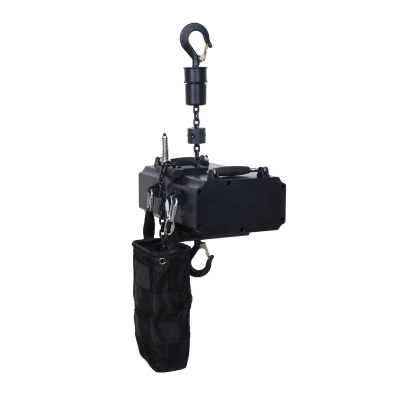
Hoists lift heavy trusses to ceiling height effortlessly. Slings make secure connections between hoist and truss. They are wrapped around the truss chords (at node points) to create secure attachment points for shackles and hoist hooks.
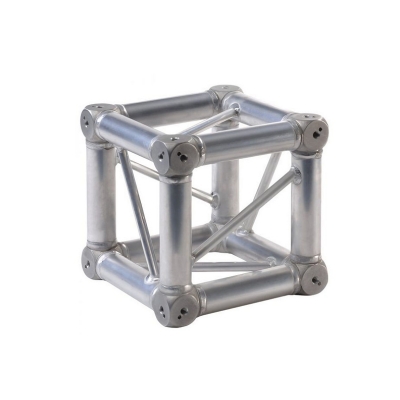 |
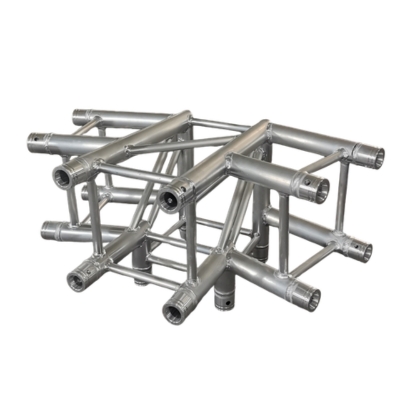 |
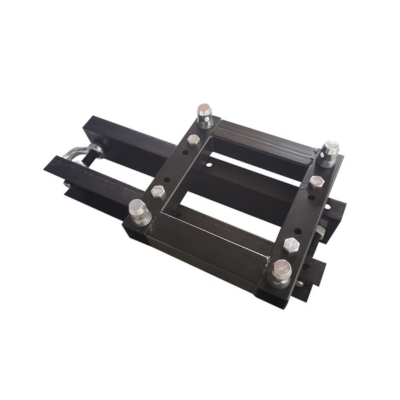 |
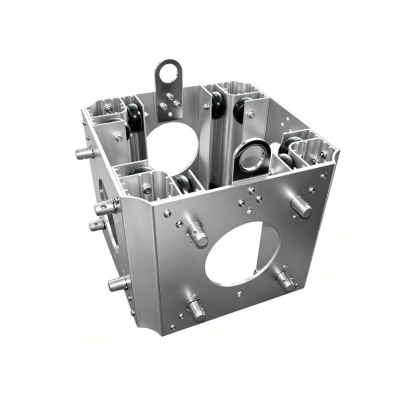 |
| Box Corners | Truss Corners | Top Sections | Sleeve Blocks |
 |
 |
 |
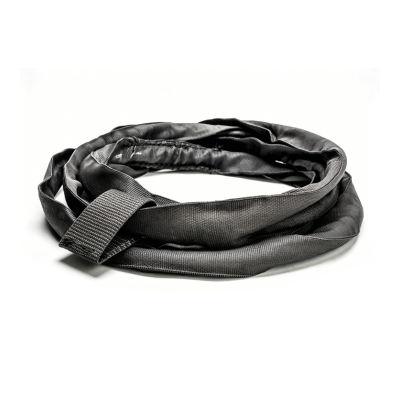 |
| Bases | Hinges | Hoists | Slings |
How Does a Stage Truss System Work
A stage truss system may look complex, but it actually works through three very clear ideas: how it is built, how it carries weight, and how it is used on-site. Breaking it into these parts makes it much easier to understand.
1. How It Comes Together (Structure)
Stage truss systems are made of standard sections (usually 1m, 2m, 3m, etc.), which can be combined freely depending on the size you need. This makes the system very flexible.
Sections are connected using pins, bolts, or spigots. If you're unsure which connection method suits your setup, it helps to compare how to choose the right aluminum truss: spigot vs. bolt in more detail. These connections are designed to be quick but secure, so crews can work efficiently without sacrificing safety.
For smaller setups, the structure is often built on the ground and then lifted. For larger systems, it is assembled step by step in position. This flexibility helps adapt to different site conditions.
With standard sizes and connections, workers can quickly figure out how to build the structure, even in a new venue.
To make this easier to understand, here’s a quick look at how a stage truss system is assembled in practice:
2. How It Holds the Load (Safety)
Load is hardly rested on a single point. Instead, stage truss spreads the weight of lights, speakers, or LED screens across the entire structure.
The shape of trusses also plays a key role. The box designs are particularly effective at resisting bending and twisting. This is why stage trusses remain stable even when supporting heavy equipment.
Aluminum makes trusses lightweight and portable, but once assembled, the whole structure gains impressive rigidity and dependability.
Even distribution of weight keeps the system stable. If loads are uneven, performance can suffer. That is why planning the layout is important.
3. How It Works On Site (Usage)
Lights, speakers, and LED panels are attached using clamps, brackets, or mounting systems. Stage truss provides clear positions for installation.
One of the cool things about a good stage truss system is its adaptability. The same components of components can be reconfigured to suit exhibitions, concerts, outdoor festivals, or indoor events by changing the configuration.
Stage truss isn’t just there to hold things up. It also helps organize the entire arrangement. Teams can clearly see where everything belongs, which cuts down on confusion and saves time.
How to Choose the Right Truss System for Different Needs
Choosing the right truss system involves more than just picking a product. It’s about making sure everything runs smoothly on the job site. Instead of only zeroing in on cost or technical specs, think about how the truss will be used.
1. Usage Scenario (Start with What You Need It For)
This is the first and most important step. You need to clearly understand your application:
For example, outdoor events usually need stronger and more stable structures due to wind and environmental factors. On the other hand, exhibition setups might care more about appearances, lightweight designs, and quick assemblies. Starting with the right design helps avoid overbuilding or underestimating your needs.
2. Load Requirements (Not Bigger, But More Suitable)
Many beginners assume “stronger is better,” but that’s not always true. Instead, you are expected to think about:
A truss system works best when the load is well-distributed. If most of the weight is on one side, like with an LED wall, you may need a sturdier structure. The goal is to choose something that is safe and stable for your setup, not just the highest load capacity on paper.
3. Truss Type (Fit Matters More Than Price)
The key idea is simple:
The right structure saves time and effort, while the wrong choice can make installation harder and less efficient.
4. Compatibility and Expandability (Think Beyond One Project)
If you want to use the same stage truss system for more than one project, not just one event, you need to think about compatibility. Here are some things to think about before you make a decision:
In the long run, a good truss system should be flexible enough to grow with you. You don’t want something that only works for one setup. Ideally, it should adapt to different projects without forcing you to start from scratch every time.
What Happens If You Choose the Wrong Truss
1. You May Be Exceeding Safe Load Limits Without Realizing
You hang lights, speakers, and an LED screen. Each piece seems light alone. But combined, they can actually exceed the truss limit pretty easily. The setup looks steady at first, giving you a false sense of safety. However, pushing past the limit puts stress on joints and the frame over time. Worse still, any wind or movement outside heightens those risks.
2. Stability and Safety Risks Increase
Stability and safety often suffer when a truss does not suit its intended purpose. These problems may not be obvious during installation, but they typically emerge later during operation. Structural integrity can fail due to factors like uneven load distribution, wind forces, or movement from machinery.
3. Small Issues Turn Into Bigger Costs
What starts as a small mismatch can easily turn into bigger issues down the line. You might find yourself spending extra time adjusting the setup, dealing with stability problems, or replacing parts sooner than expected. All of this adds to both labor and maintenance costs.
These small problems add up over time. The wrong stage truss can cause more repairs, shorter equipment lifespan, and less reliable performance overall, which means you end up spending more money than you would have if you had chosen the right system from the start.
Let's Find the Right Stage Truss System for You!
A good place to start is by looking at the total load you plan to hang, rather than thinking about each piece of equipment separately. It also helps to consider whether your setup will be indoors or outdoors, and whether it’s for a one-time event or something you’ll use repeatedly.
Make sure the truss system meets recognized certifications, such as TÜV SÜD, and don’t skip proper load calculations. If you want to understand why certification standards matter in real-world applications, you can read more about why EN 1090-3 certification matters in aluminum truss and stage structures.
To pick the best type:
If you’d like to see how different truss systems come together in real projects, it helps to look at actual setups across different applications.


 IPv6 network supported
Leave A Message
Scan to Whatsapp :

Hi! Click one of our members below to chat on
 Tel :
Tel : Email :
 English
 Français
 Pусский
 Español
 العربية