The Foundation of Every Successful Stage
In professional production, the stage truss is the skeleton that holds the entire show together. It isn’t just a technical specification on a blueprint; it is a decision that dictates how many stagehands and forklifts you need to hire, and how much weight it can actually handle.
For years, there has been a hot debate among people about whether to stick with the "heavy-duty" traditional steel truss or embrace the modular flexibility of aluminum truss. Neither material is a universal "winner" in every category. Instead, the right choice depends entirely on the nature of the project, whether it’s a mobile concert tour or a permanent high-capacity installation.
In this guide, we will break down the practical differences between an aluminum truss and its steel counterpart. If you are new to the world of stage rigging and want a foundational overview first, our introduction to stage truss systems is a good starting point before diving into this comparison. For those already familiar with the basics, we will get straight to what matters: the load capacity, the ROI, the labor costs, and the safety factors that actually make or break a decision when you are under a tight deadline and need a reliable stage truss setup.
Material Science: Aluminum vs. Industrial Steel
To understand the comparison, we have to look at the metallurgical properties of these structures. The performance of a stage truss starts at the molecular level.
In the professional rigging world, a high-quality stage truss is primarily made from aluminum 6061-T6 and aluminum 6082-T6. This is an "aircraft-grade" alloy that has been treated for maximum strength and hardness. The "T6" refers to the tempering process, which involves heat-treating the metal to create a material that is incredibly stiff. This alloy is the standard for a portable stage truss because it provides excellent structural integrity while remaining exceptionally lightweight. If you are unsure whether a spigot or bolt connection system suits your project better, our detailed breakdown of spigot vs. bolt aluminum truss covers the key differences.
Steel is the titan of the construction world. It is undeniably denser and offers a different kind of rigidity. To protect it from the elements, a steel stage truss must be galvanized or painted, which adds to its overall bulk. While this density is a disadvantage for touring gear, it is a massive asset for permanent stadium roofs or industrial grids where the structure will never move. In those cases, the sheer mass of steel provides a level of vibration dampening and long-term stability that aluminum cannot match.
The Weight Factor: Speed vs. Stability
Weight is the most impactful variable in event logistics. Depending on your business model, weight can either be your enemy or your greatest structural ally.
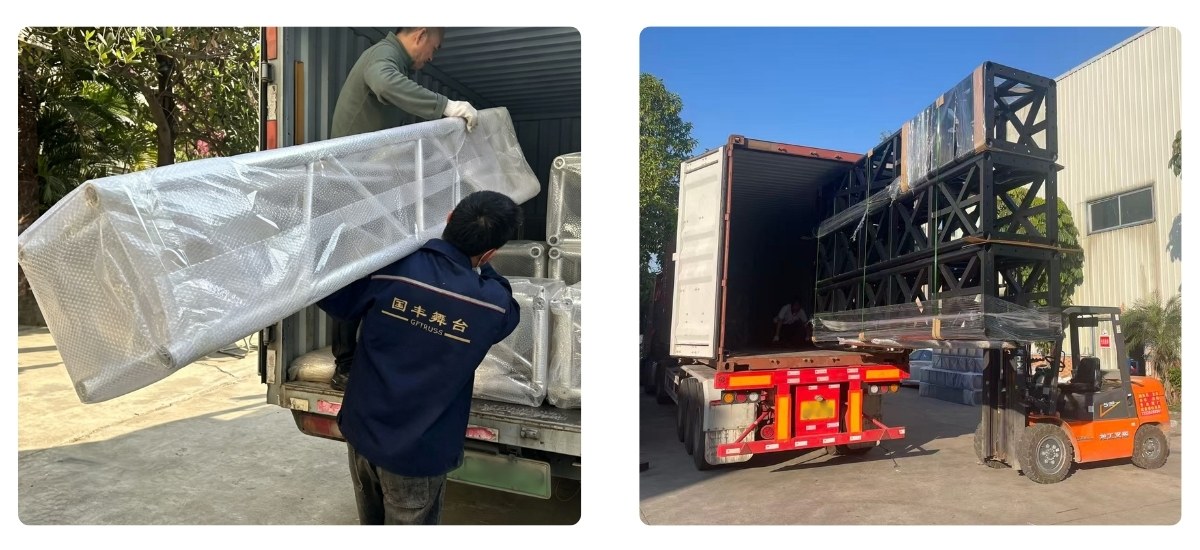
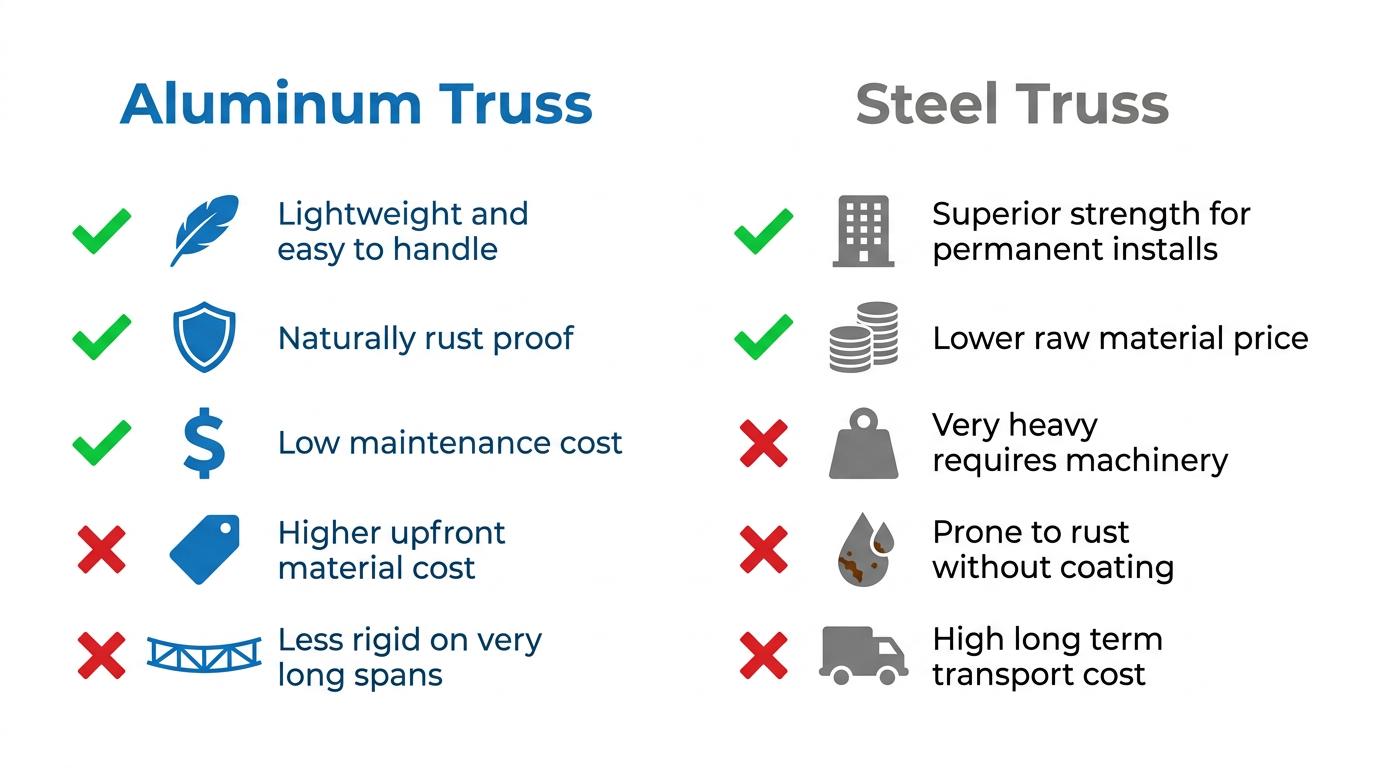
An aluminum truss is roughly one-third the weight of a steel section of the same size. For a rental company hauling a massive stage truss roof across the country, this weight difference is a primary concern. Using aluminum allows you to fit more production equipment on a single truck before hitting weight limits. Conversely, if you are building a fixed installation where transportation is a one-time cost, the weight of a steel stage truss is less of a concern and may even be preferred for its heavy-duty feel.
Labor costs are a major part of any budget. As an aluminum truss is light, a two-person crew can usually carry and connect sections manually. This allows for rapid assembly in tight venue windows. If you are working with a steel stage truss, the physics change. You will likely need forklifts or material lifts just to move components into place. For a permanent stadium install, this extra labor is a small price to pay for the ultimate durability of steel. However, for a one-night corporate event, it can be a deal-breaker.
Load Capacity in the Modern Stage Truss Environment
The debate often centers on whether aluminum is "strong enough." The answer depends on the scale of the load and the span of the rig.
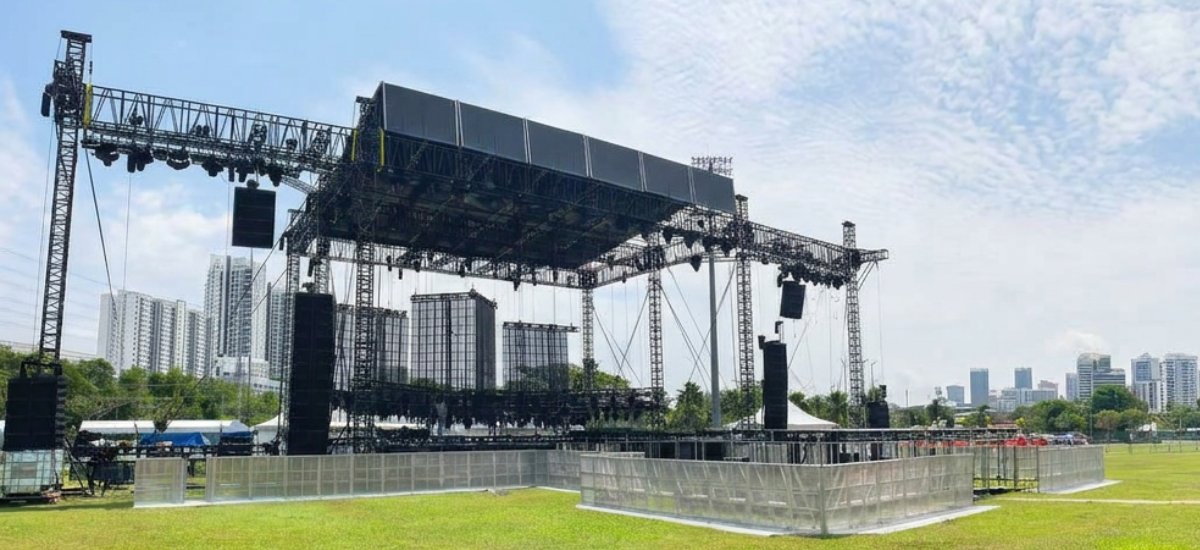
Modern event rigs usually consist of LED video walls and line-array speakers. A standard 290mm or 400mm aluminum truss is specifically engineered to handle these point loads. When you consult the certified load chart for a professional stage truss, you'll see that aluminum systems are more than capable of supporting professional production gear. However, for extreme spans such as a 50-meter roof over a stadium, the extra tensile strength of a steel stage truss becomes necessary to prevent excessive "sag" or deflection.
Safety is about staying within the calculated limits of your material. Both materials come with strictly tested load tables. As long as a rigger follows these charts and accounts for the required safety factor, both are equally safe. Aluminum provides a predictable visual warning by showing slight deflection before reaching its limit, whereas a steel stage truss remains very rigid right up until it hits its maximum capacity. For event pros operating in European markets, this safety behavior is one of the reasons why aluminum structures are increasingly specified under EN 1090-3 certification standards, which set strict requirements for the structural performance of aluminum components.
Durability and Weather Resistance (Indoor vs. Outdoor)
The environment you use it in will largely determine which material will last longer in your inventory.
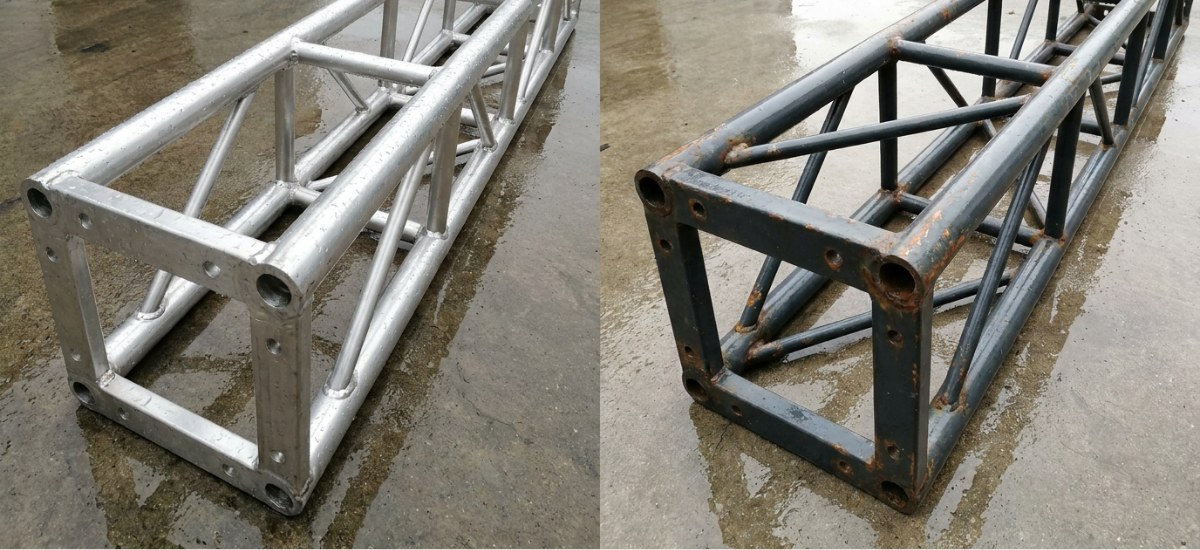
Aluminum possesses a natural ability to fight off corrosion. As soon as the metal comes into contact with oxygen, it creates a microscopic oxide film that covers the entire surface. This barrier prevents moisture from reaching the core of the material. You can store aluminum in less-than-perfect conditions without worrying about structural decay.
Steel requires much more maintenance. If the paint or galvanization on a steel stage truss gets scratched in a warehouse, which is inevitable, the exposed iron will rust. Once rust begins inside the tube, it becomes a hidden safety risk. For this reason, steel is best suited for climate-controlled indoor venues or structures with high-quality permanent coatings.
An aluminum stage truss maintains its "pro" silver look for a long time with minimal cleaning. Steel trusses often require regular repainting to remain presentable. If your clients are high-end corporate brands, they usually prefer the clean, metallic look of aluminum. If you are building a "black box" theater where the gear is hidden, the aesthetic upkeep of steel is less of an issue.
Calculating the ROI: Which Investment Makes Sense?
The purchase price of the material is only the starting point of the financial analysis.
When you calculate the "Total Cost of Ownership" over five to ten years, the results vary based on use.
There is a massive global market for used 290mm (F34) and 400mm stage truss sections made of aluminum. If you decide to sell your inventory to upgrade, you can expect aluminum to hold its value well. Steel trusses are much harder to resell on the secondary market because the shipping costs often exceed the value of the used gear, making them a more "permanent" financial commitment.
| Feature | Aluminum Stage Truss | Steel Stage Truss |
| Handling | Lightweight / Manually liftable | Heavy / Often requires machines |
| Setup Speed | Fast (Ideal for touring) | Slower (Ideal for fixed installs) |
| Corrosion | Rust-proof / Self-protecting | Needs coating to prevent rust |
| Logistics | High Freight Efficiency | High Freight Cost |
| Best For | Touring, Festivals, Corporate | Stadium Roofs, Fixed Grids |
FAQ
Q: Is an aluminum stage truss as safe as steel?
A: Yes. Safety is a matter of following the engineering specs. A certified aluminum truss is used in the world's largest concert tours with a perfect safety record when used within its load limits.
Q: Can I mix aluminum and steel sections together?
A: Absolutely not. Never mix different materials in the same span. The metals react differently to temperature and weight, which can cause uneven stress and potential structural failure in your stage truss.
Q: Why is aluminum more expensive upfront?
A: Aluminum is more expensive to refine and requires specialized welding skills and equipment. However, the operational savings in labor often offset this initial cost for rental businesses.
Making the Beat Choice for Your Project
Choosing between aluminum and steel is about looking at your daily operations. If you are designing a high capacity truss system for a stadium or a large theater where the equipment will remain fixed to the structural supports for the next twenty years, the weight of a steel stage truss is not a liability. In that specific scenario, the raw material savings and the massive structural rigidity make steel the better investment.
For rental companies, and event organizers, the aluminum truss is a business efficiency tool. The logic is simple: if your gear spends more time in a truck than it does use in a permanent rig, every kilogram you shave off is money in your pocket. Aluminum is the industry standard for a reason. It lets you be fast, light, and rust proof in any environment. Before you buy your next set of gear, look at your five year plan. If portability is part of your profit margin, aluminum is the best choice.


 IPv6 network supported
Leave A Message
Scan to Whatsapp :

Hi! Click one of our members below to chat on
 Tel :
Tel : Email :
 English
 Français
 Pусский
 Español
 العربية