A custom LED wall is more than the screens themselves. It is a complete system that includes the panels, the support structure that holds them, and the installation. While the LED panels define the picture, it is the support structure that keeps the wall standing, level and safe, especially for large, curved or outdoor installations.
This guide covers how to plan the LED wall support structure for a custom-sized LED wall system: what to define first, how to choose the right support type, and what to prepare before requesting a quotation. The principles described here apply to any custom LED wall project, and the design process itself follows the same steps regardless of screen brand or panel size. At GF-Truss, we focus on the structural design and manufacturing of aluminum support systems, helping customers address different requirements in LED wall installations.
What Does a Custom LED Wall System Include?
A complete LED wall support system has three parts:
1. LED panels: supplied by your screen manufacturer.
2. Support structure: the ground beams, ladder trusses, bases, quick locks/screw locks, and crossbars that hold the panels. This is where the truss and staging manufacturer comes in.
3. Installation & rigging: assembly, leveling and safety checking on site.
Choosing the right structure early can avoid costly rework and unsafe setups. Our step by step guide How to Install LED Wall Ground Supports? explains how the whole system goes together on site.
Key Dimensions Before Designing the Support
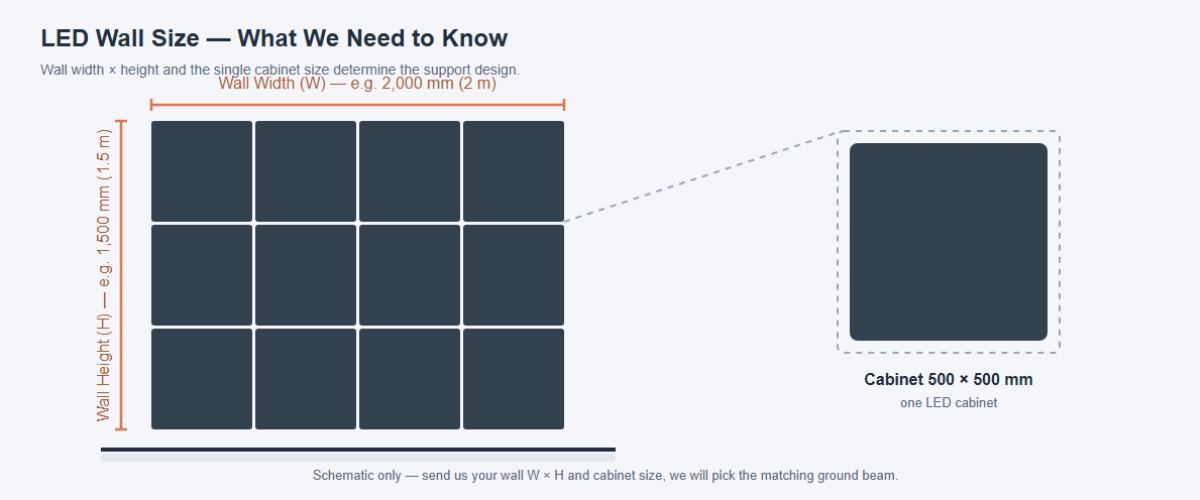
Before we design the LED wall support structure, we need the following information from you:
Choosing the Right LED Wall Support Type: Ground, Off-Ground or Hanging
The support type follows directly from the dimensions above:
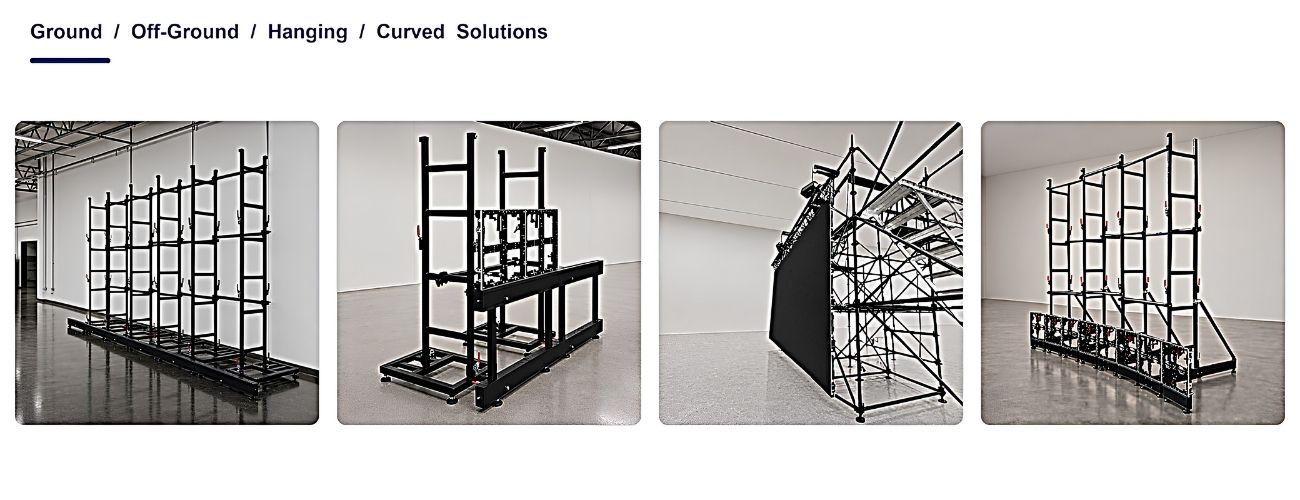
Ground-supported/stacking structures place the LED wall directly on base beams or ground frames. They are commonly used for temporary events on solid and level surfaces, especially when ceiling suspension is unavailable. LED wall ground support offers fast installation and does not require overhead load capacity.
Off-ground structures elevate the LED wall above the ground using vertical supports and bracing systems. They are often selected for stages, broadcast environments, and applications where better visibility or space utilization is required. Compared with ground support structure, the lifting structure requires careful consideration of stability, leg design, and lateral reinforcement.
Hanging LED walls are suspended from existing structures such as aluminum truss systems. This solution is suitable for permanent venues, studios, and installations where floor space needs to remain clear. In these installations, a dedicated hanging beam is often used to connect the LED panels with the supporting structure.
Curved LED walls using curved or flexible LED panels may require different support solutions depending on the screen structure and installation needs. Based on the installation height and site conditions, curved ground support or curved off-ground solutions can be selected to accommodate different structural layouts and installation requirements.
For a custom-sized wall, Our overview article LED Wall Ground Support Systems: Types, Design and Applications explains every support type in detail.
Structural Design for Large or Unusual Custom Walls
Once the type is chosen, the engineering begins. The goal is not just to hold the panels up, but to keep the whole wall stable under its own weight, during assembly, and throughout operation. The following design considerations apply to most custom LED wall projects.
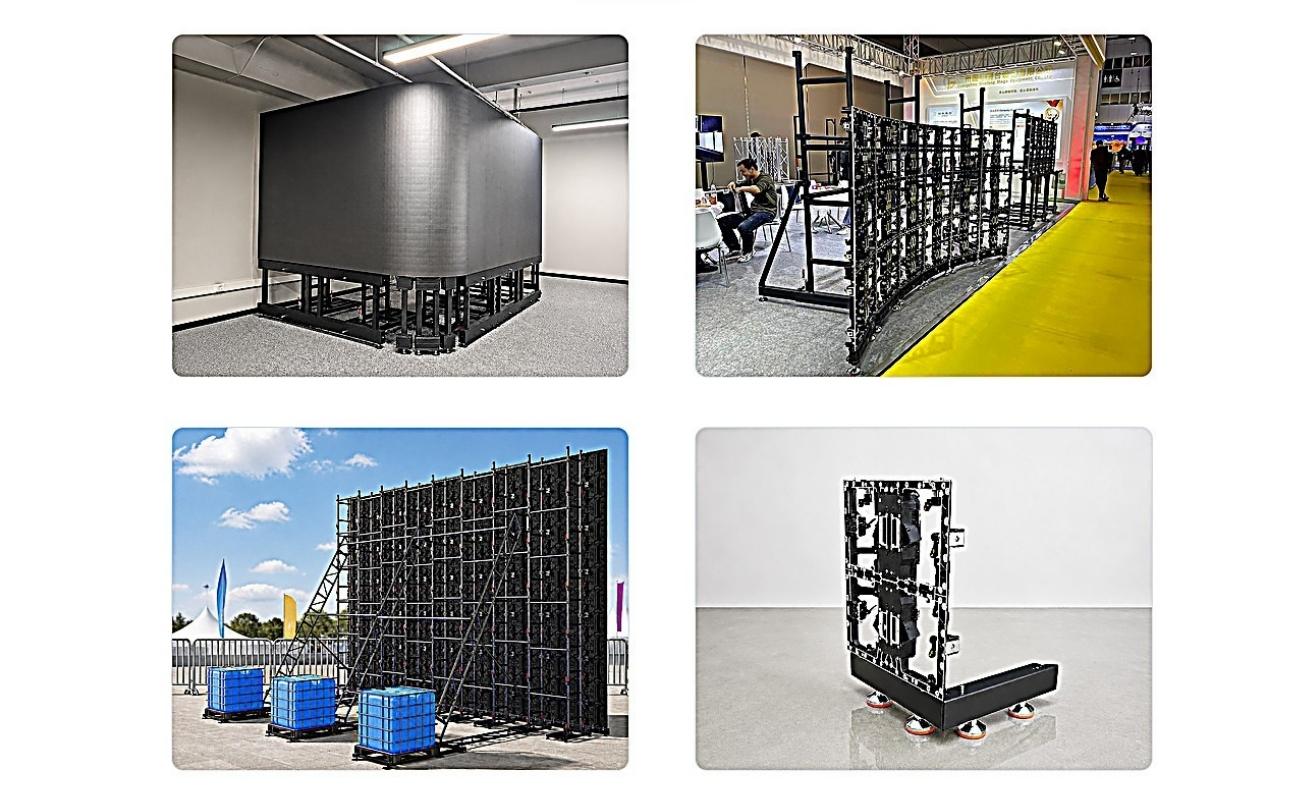
As the wall gets taller, the center of gravity rises, and the same base width provides less resistance to tipping. When the display height reaches 5 meters, an enlarged base with ballast capacity is recommended. It is recommended to see the Ballast System Enlarged Base LED Video Wall Ground Support 8×6m for the specification of this enlarged option. The wider footprint and the provision for counterweights increase the overturning resistance of the structure, which matters for tall walls and for walls used outdoors.
For outdoor use, wind load is usually the governing factor, because the force applied by wind on a tall screen can exceed the weight of the screen itself. Wind conditions vary significantly by region, season and exposure, so the design should be evaluated against the local environment of the installation site. In practice this means using a wider base, adding ballast, or anchoring the structure to the ground where the site allows. The exact amount of ballast or the anchoring method depends on different sites.
Ground beams do not have to run in a straight line. The ground beams can be cut and angled to form 90-degree corners, which allows L-shaped wall layouts, corner transitions and screens that wrap around a structure. This is a common requirement for exhibition booths, product launches and multi-face displays, where the wall needs to follow the shape of the venue rather than the other way around.
Combining flat LED panels with flexible LED panels can also be realized through our LED wall support system. By considering the different structural characteristics of each panel type, we customize support systems that can be achieved seamless integration and consistent alignment.
Our LED wall support systems are designed to accommodate both 500×500mm and 500×1000mm LED panels/cabinets, providing greater flexibility for different screen dimensions and configurations. This flexible design helps optimize screen layouts, adapt to various project requirements, and achieve more efficient installation for LED walls.
How We Deliver Custom LED Wall Support Solutions
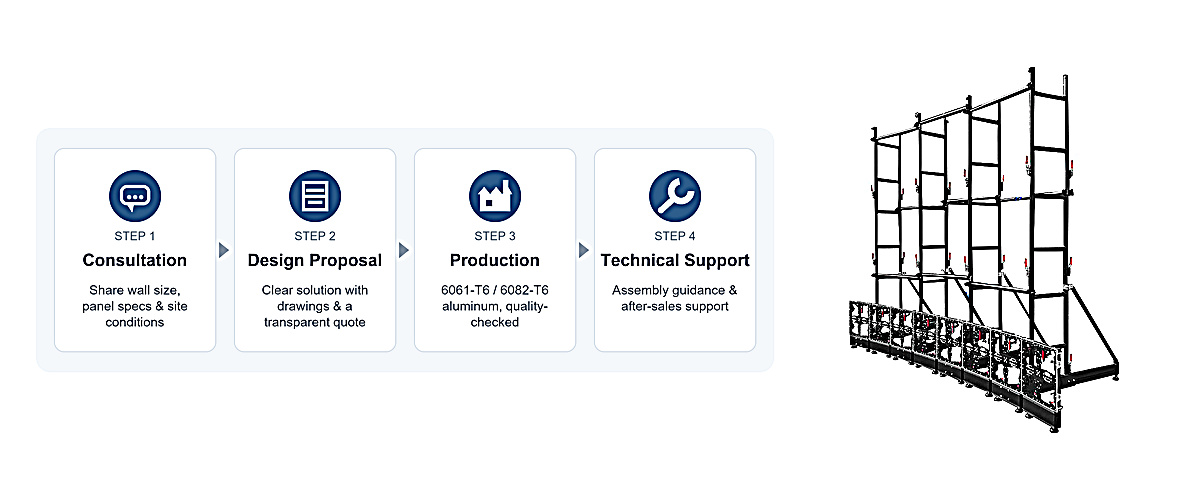
Our customization process is designed to remove guesswork:
Our engineering team combines practical experience with structural expertise to provide customized support solutions that help ensure safe, efficient, and reliable installations. More information about our customized solutions can be found at www.gftrusses.com.
FAQ
Q: How tall can your LED wall ground support go?
A: A standard LED wall ground support system reaches up to 5m. With the enlarged base version (Ballast System Enlarged Base LED Video Wall Ground Support), the height can reach 8m. For indoor installations where the structure can be fixed to the wall, heights up to 10m are possible.
Q: Can you customize the locks?
A: Panel-to-structure connection is a common friction point, especially with rental panels from different manufacturers. If your panels have quick lock holes, send us the panel drawing and we can customize the quick locks to match. If the panels have no quick lock holes, screw locks are used instead.
Q: LED Ground support or truss: which should I choose for my LED wall?
A: This choice comes up often when ordering the first wall. Ground support is faster to assemble and needs no ceiling points, which suits rental use and touring. Truss or hanging systems suit high walls and venues with structural points. The support type comparison above explains the trade-offs in detail, and we can recommend a configuration for your specific wall.
Q: What information do you need for a custom quote?
A: Wall size (W×H), LED panel size, ground/off-ground, flat/curved, indoor/outdoor. With these we can usually provide a preliminary solution and quotation within 2 working days. Browse our LED wall support category to see all available custom LED wall support solutions.


 IPv6 network supported
Leave A Message
Scan to Whatsapp :

Hi! Click one of our members below to chat on
 Tel :
Tel : Email :
 English
 Français
 Pусский
 Español
 العربية