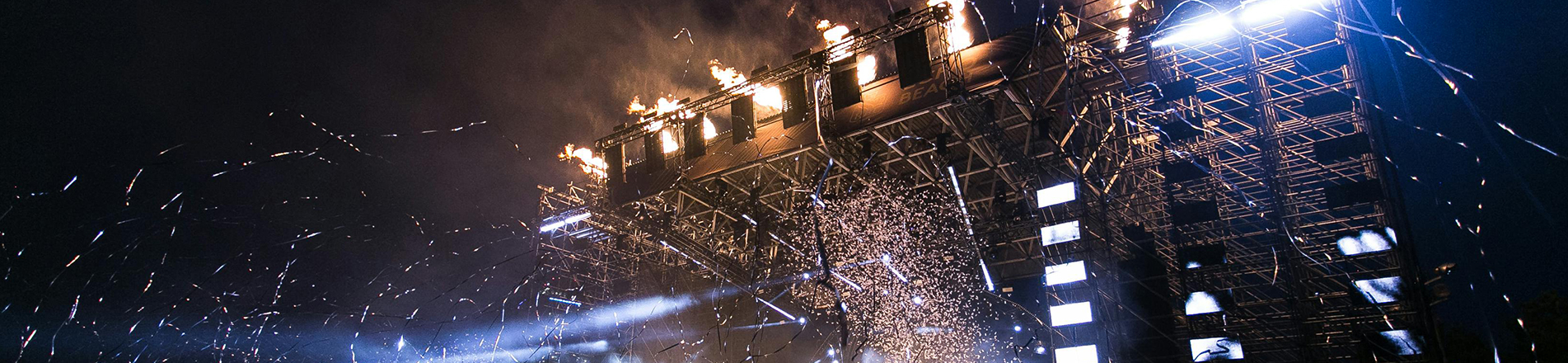
This guide covers three common applications of a stage truss system: concerts, trade shows, and outdoor events. For each, we explain how to choose event truss for each application by comparing load requirements, configuration, compatibility, installation conditions, and long term use.
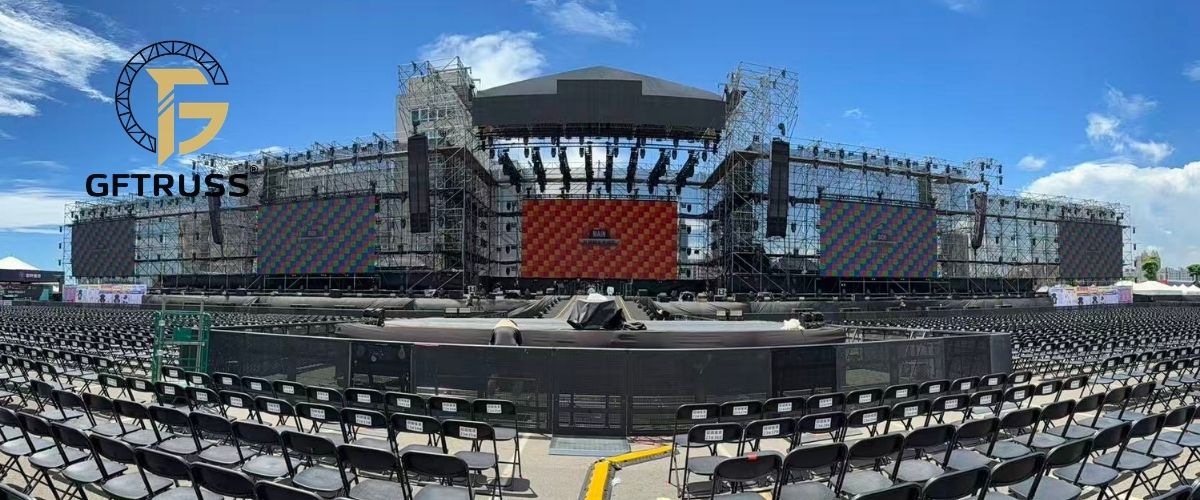
What Event Truss Actually Does
An event stage truss system is the modular metal framework that safely supports production equipment above or around a stage. In practice it holds lighting, speakers, LED screens, banners, and scenery; transfers their combined weight to towers, ground supports, or engineered rigging points; and creates structures ranging from lighting grids and stage roofs to exhibition booths and entrance arches. Because everything is elevated, the floor can stay clear and audience sightline stay unobstructed.
Most event truss is made from aluminum alloy 6082-T6 or 6061-T6. Both perform well for standard event applications. What matters more is tube wall thickness, weld design, cross-section size, and connector geometry must also be considered. Our aluminum stage truss anatomy guide explains how these components work together.
Concert Truss: High Payload and Fast Setup
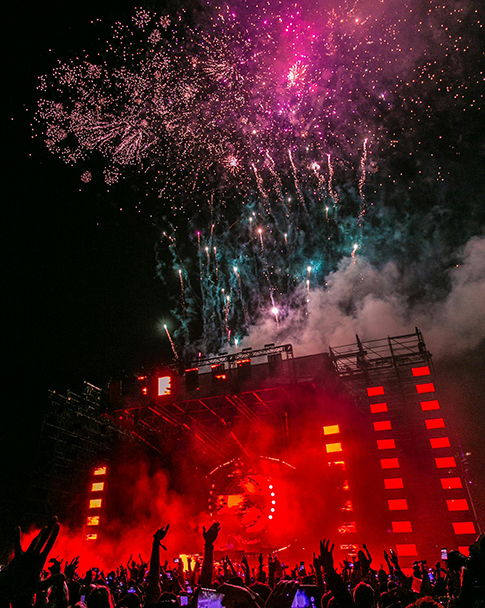
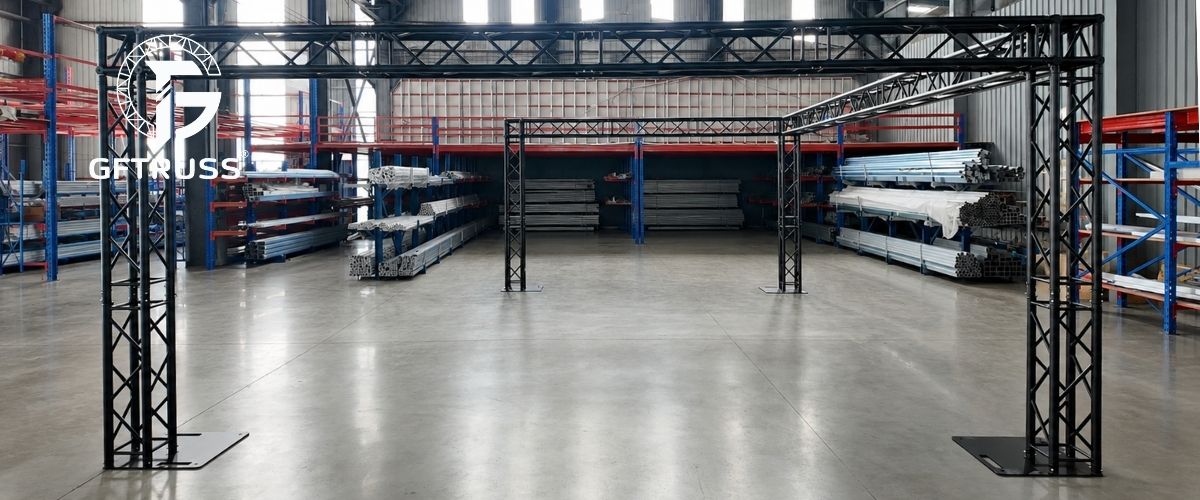
Concert production puts the heaviest demands on truss. A typical touring rig will load the main truss with a combination of moving head lights, line array speakers, LED display panels. It is usual for a single main truss run of to carry 800 kg to over 1,500 kg of suspended equipment.
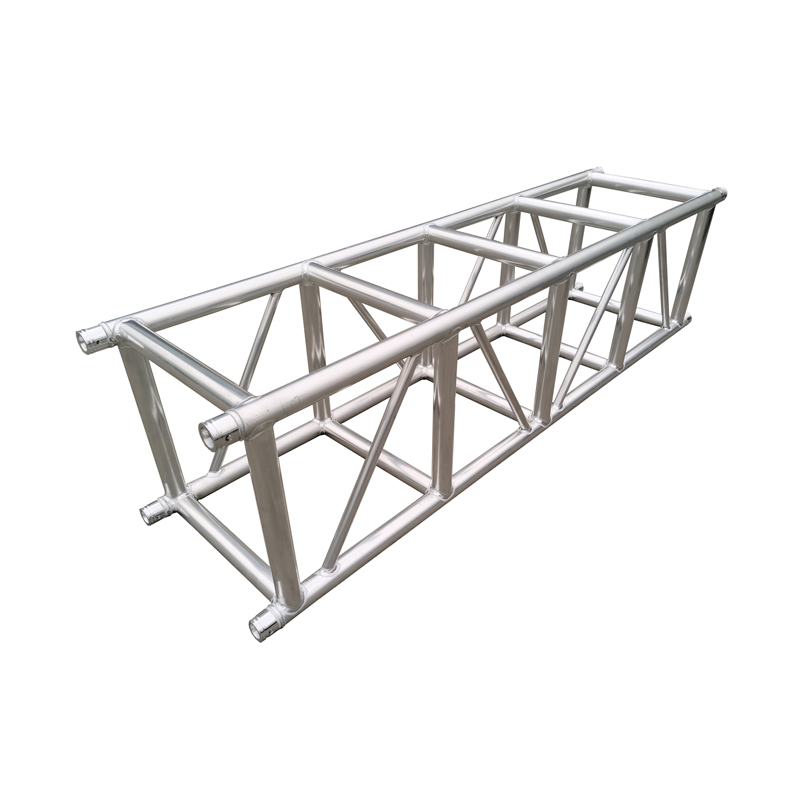
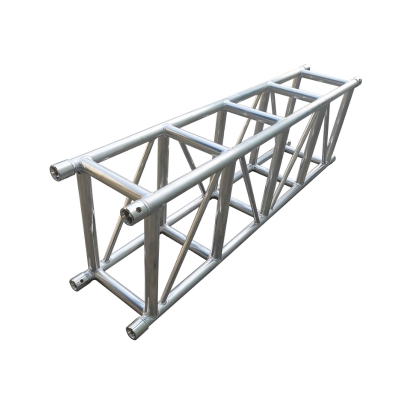
The truss cross section must be selected according to the complete configuration. Our guide to choosing the right lighting truss size explains the practical differences between common truss dimensions. Products such as 520x520 mm box truss, and 520x760 mm rectangular truss are commonly considered for larger structures. Using a 200mm section in this role is a structural mismatch that most experienced organizers will refuse to use.
These larger truss options are designed for concert stages, LED screen supports, roof structures, and other demanding event configurations. Contact our team with your project dimensions, support positions, equipment weight, and installation environment. We can review your project information and help identify a compatible truss option for your complete configuration.
For touring concerts, efficient and reusable equipment is a critical consideration. Truss systems must withstand frequent assembly, transportation, and dismantling without losing structural integrity or connection accuracy. Durable materials, standardized components, and replaceable connection hardware can extend service life. Regular inspection remains essential to identify deformation, cracks, excessive wear, or damaged connectors before each installation.
LED video walls can impose substantially greater loads than buyers initially expect. For example, a 3.5 m by 2 m display may weigh 230 kg or more. Load position is equally important, as concentrated loads affect the bending moment, shear force, connection capacity, and deflection of the truss. The required truss size and allowable span must therefore be determined using the manufacturer’s load data. For complex installations or configurations not directly covered by the manufacturer’s data, the complete structural design should be verified by an engineering consultancy specializing in truss systems and temporary event structures.
Trade Show Truss: Modularity, Compatibility, and Efficient Setup
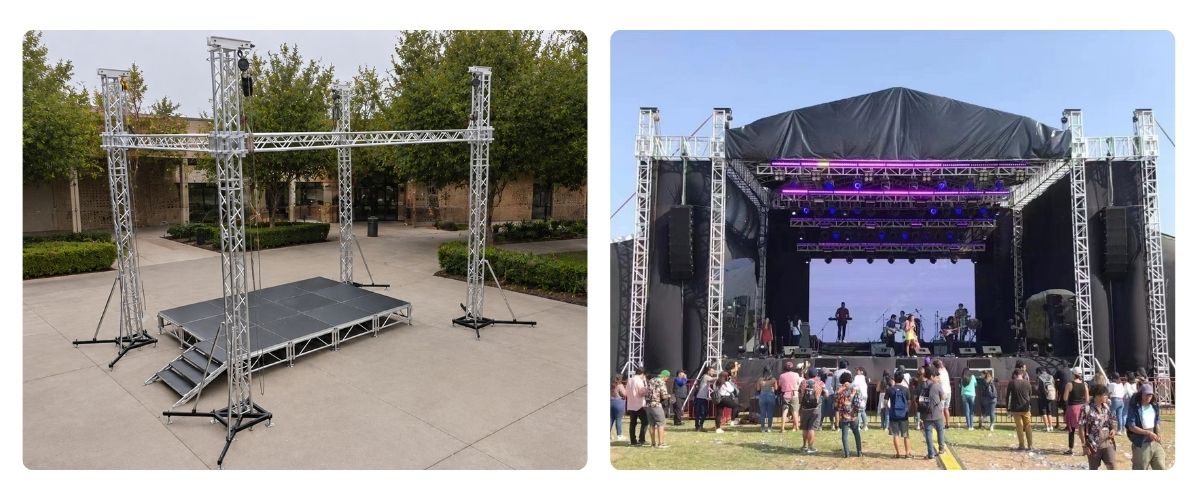
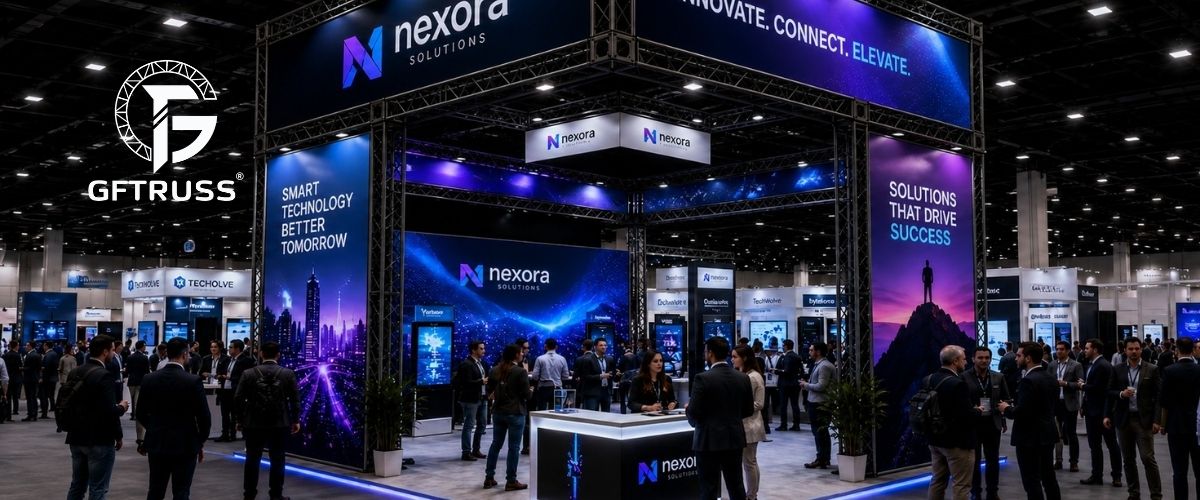
The requirements at a trade show are almost the opposite of a concert rig. Payloads are lighter, but the system needs to reconfigure efficiently across booth sizes ranging from a 3x3m inline space to a 10x10m island exhibit. Setup is typically done by small teams, sometimes without specialized rigging crew, which means the assembly process has to be genuinely straightforward.
A 290x290 mm square truss covers the structural needs of most trade show applications. It is light enough to be handled by two people, strong enough to support fabric banners, LED strip fixtures, product spotlights, and small monitor screens.
The more important question for exhibition environments is the connector system and accessory compatibility. A modular truss system where every truss corner, and sleeve block comes from the same manufacturer will give you a reusable build each time. Where buyers run into trouble is purchasing the main trusses from one source and then sourcing accessories elsewhere. Coupler tolerances, and tube outer diameters vary between manufacturers. When parts do not fit together cleanly, the assembled structure carries load unevenly and visual alignment suffers.
Outdoor Event Truss: Wind and Stability Considerations
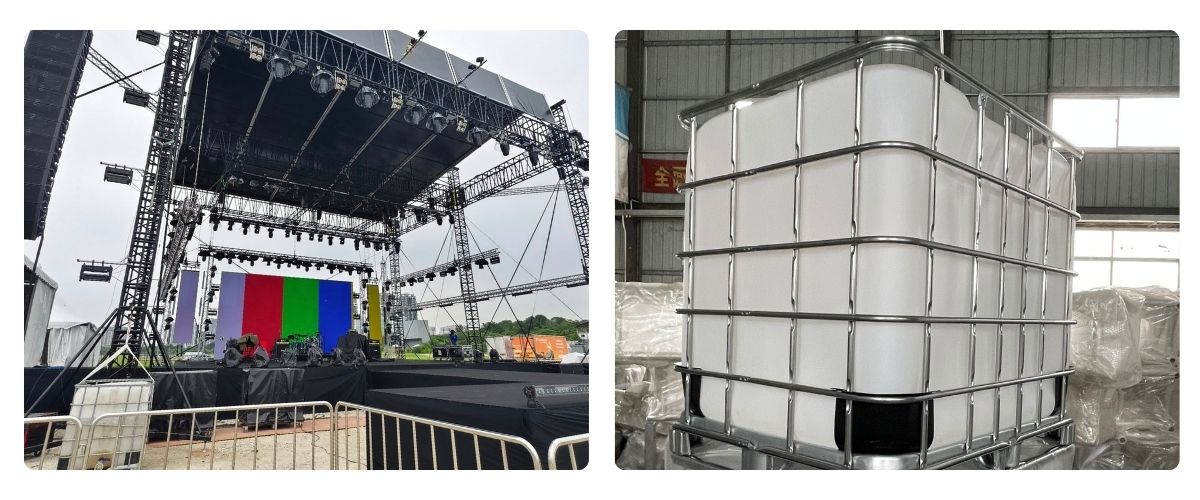
Outdoor event truss structures are affected by wind, especially when banners, LED screens, and tarpaulins are attached. These additions increase wind loading and can affect the stability of the complete structure.
Outdoor stability may require outriggers, steel wire ropes, ballast, ground anchors, or a combination of these methods. The appropriate arrangement depends on the complete structure and actual site conditions. Water filled ballast tanks can be practical where ground penetration is not permitted, but their required weight, placement, attachment, and supporting surface must be verified. Ballast improves overall stability, but it does not increase the structural capacity of the truss itself.
Before installation, the complete configuration should be assessed by a qualified structural engineer with experience in temporary event structures. This assessment should include the truss layout, supported equipment, attached banners or screens, stabilization method, ground conditions, and expected weather conditions. The truss supplier can provide product specifications and available load data, while the project engineer should confirm whether the complete structure is suitable for the intended outdoor application.
Before You Buy: Application, System Compatibility, and Long Term Support
Choosing event truss should begin with the intended application rather than the external size or purchase price alone. Concert lighting rigs, exhibition booths, LED screen supports, entrance structures, and outdoor installations place different demands on a truss system. Before requesting a quotation, define how the truss will be used, the approximate span, the support arrangement, the equipment to be attached, and whether the structure will be installed indoors or outdoors.
⬤ Start with the Complete Configuration
A truss section cannot be evaluated separately from the structure in which it will be used. Span, support positions, load location, corners, towers, sleeve blocks, and suspended equipment all affect the final configuration. It is expected to provide the supplier with as much project information as possible. This should include the planned dimensions, equipment types, approximate equipment weights, and installation environment.
⬤ Keep Components Within a Compatible System
Truss sections with similar external dimensions are not automatically interchangeable. Chord diameters, spigot dimensions, pin geometry, connector tolerances, and brace arrangements can vary between product systems.
Truss sections, corners, bases, sleeve blocks, spigots, and pins should therefore come from a confirmed compatible system. A connector that physically fits does not necessarily provide the intended structural performance. Components from different manufacturers should not be combined unless they are produced as an exact one-to-one match based on design drawings.
Using one consistent system also makes future expansion easier. Additional lengths, corners, connectors, and tower components are more likely to align correctly when they belong to the same product series.
⬤ Confirm the Available Product Information
Before ordering, confirm which product specifications are available for the selected truss. Relevant information may include the model number, cross section, overall dimensions, tube dimensions, aluminum alloy, unit weight, connection type, surface finish, and recommended connection hardware.
⬤ Consider Long Term Use
A reusable truss system depends on the continued availability of compatible parts. Ask whether replacement spigots, pins, R-clips, corners, bases, and other accessories will remain available. Generic connection hardware should not be used as a substitute simply because it appears to fit.
Storage, transportation, and inspection should also be considered before purchase. Repeated handling can cause dents, deformation, connector wear, or weld damage. It is recommended to check components regularly and stop using any damaged sections.
| Information | What to Include | Why It Matters |
| Intended application | Concert, exhibition booth, LED wall, entrance structure or outdoor event | Different applications require different configurations and accessories |
| Structure dimensions | Approximate length, width, and height | Helps define the overall layout and component quantities |
| Attached equipment | Equipment type and approximate weight | Equipment location is as important as total equipment weight |
| Installation environment | Indoor or outdoor use and expected site conditions | Helps identify environmental and stability considerations |
| Component requirements | Truss sections, corners, bases, sleeve blocks | Ensures that all components belong to a confirmed compatible system |
| Long-term requirements | Replacement parts, additional lengths and future expansion | Helps buyers maintain and expand the same system |
Need Help Planning Your Event Truss Configuration?
Share your intended application, overall dimensions, support arrangement, approximate equipment weights, and installation environment with GF-Truss. Our team can review the information provided, identify compatible product options, and prepare a quotation for your project.
Discuss Your Truss Requirements
FAQ
Q: What information should I provide before requesting a truss quotation?
A: Please provide the intended application, overall structure dimensions, support arrangement, approximate equipment weights, and installation environment. This information helps us provide the compatible aluminum truss structure.
Q: Does a larger truss always have a higher load capacity?
A: Not necessarily. External cross section is only one part of truss design. Tube dimensions, brace arrangement, alloy condition, weld design, connection system, span, and load placement all affect capacity. It is more reliable to evaluate each product based on the specific model and configuration, rather than assuming that a larger dimension is stronger.
Q: How should event truss be inspected?
A: Proper truss maintenance includes inspections before installation and after dismantling. Each inspection should cover overall straightness, main chords, braces, welds, spigots, pins, and clips, with attention to dents, cracks, twisting, corrosion, and excessive wear.
Q: How long does aluminum event truss last?
A: Aluminum truss does not have one fixed service life. Its condition depends on loading history, handling, transport, storage, environment, and inspection quality. Regular use alone does not determine when a section should be retired. Components with cracks, deformation, damaged welds, or excessive connector wear require professional assessment.


 IPv6 network supported
Leave A Message
Scan to Whatsapp :

Hi! Click one of our members below to chat on
 Tel :
Tel : Email :
 English
 Français
 Pусский
 Español
 العربية